Construction Site Security in Sanford
Sanford runs airport work, a seventy six acre retail redevelopment, industrial parks along I-4 and infill on streets that are a century and a half old. Nexus Security Firm staffs officers across all of it, and no two of those sites are covered the same way.
Construction Site Security in Sanford
Sanford is the Seminole County seat, sitting on the south shore of Lake Monroe at the head of navigation on the St. Johns River, about 20 miles northeast of downtown Orlando. The census counted 61,051 residents in 2020 and estimated 66,919 in 2024 (U.S. Census Bureau). It is the most mixed construction market we cover in Central Florida, and the mix is the point.
Along I-4, SR 417, St. Johns Parkway and Orange Boulevard it is industrial: a park of four Class A buildings totaling about 547,753 square feet, a 116,000 square foot manufacturing and logistics building that opened in May 2026 fully leased, and a 144,000 square foot flex project on 17.23 acres approved in August 2026 (reported by GrowthSpotter and the Orlando Economic Partnership). The city's economic development director said in April 2026 that roughly a million square feet of warehouse space would open within eighteen months (Capital Analytics Associates).
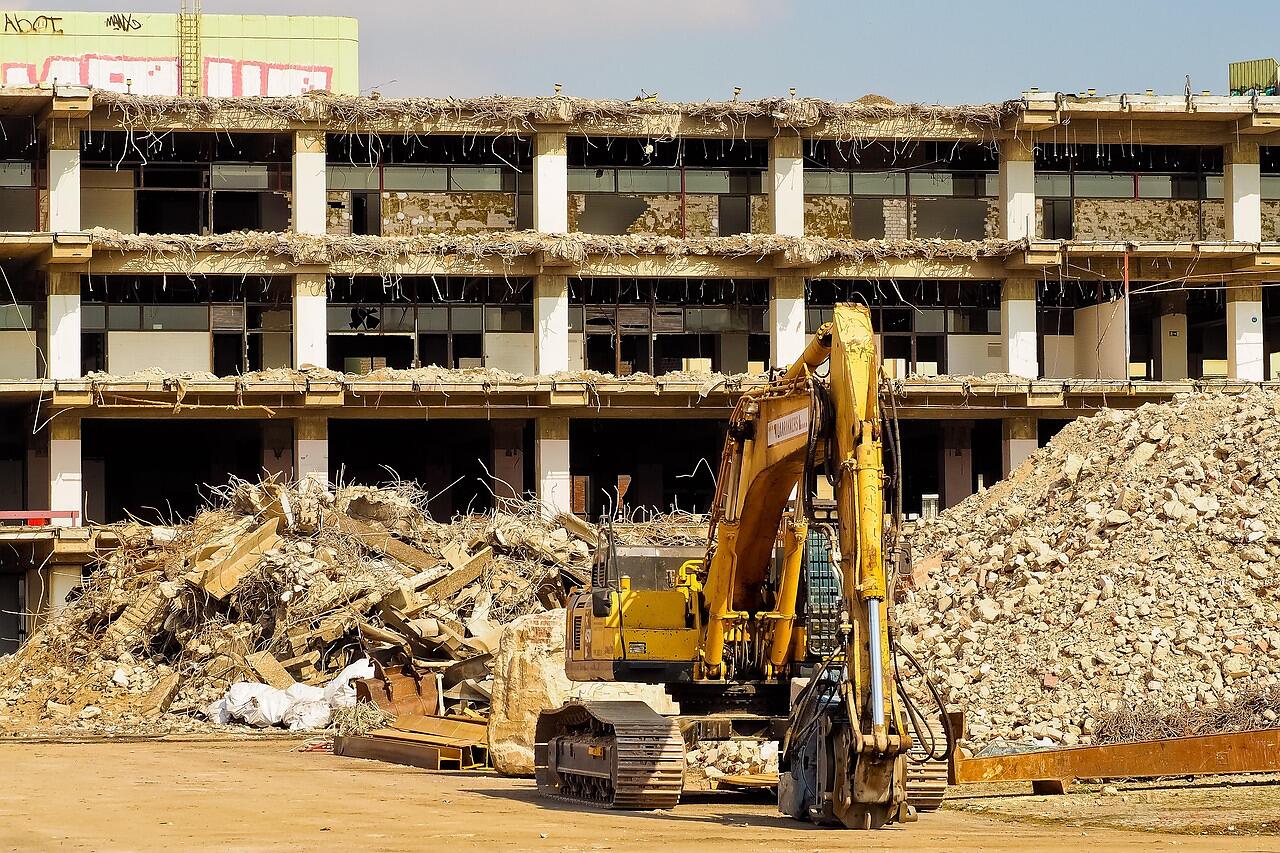
At the I-4 and SR 46 node it is a demolition and rebuild of a dead enclosed mall on seventy six acres. Around the airport it is hangars, a runway rehabilitation and a thousand space parking lot. Downtown it is brick buildings on narrow lots with infrastructure the same director put at a hundred to a hundred and fifty years old. Four different jobs, four different coverage plans.
The old mall parcel is a demolition site the size of a neighborhood
The enclosed mall at I-4 and SR 46 closed to general tenants in January 2025, and seventy six acres of it sold in March 2025 for $17.5 million into a redevelopment reported at $700 million and described as the largest commercial redevelopment in the county's history, with a 164,585 square foot warehouse club anchor slated for 2027, around 300 apartments, demolition and early site work through spring 2026 and city approval in February 2026 (reported by Spectrum News 13, WFTV, WKMG News 6 and FOX 35 Orlando).
A parcel like that has a security problem no new build has. The perimeter is a ring road with a dozen curb cuts onto public streets that the public has driven across for thirty years, so a fence has to be installed against thirty years of habit. The building being taken down is full of copper, wiring, HVAC and structural steel that becomes scrap the moment it is loose, and scrap is the easiest thing on any site to convert. And the asphalt field around it gives anyone who drives on a place to park out of sight of every road. Coverage here is about the curb cuts and the scrap staging, in that order.
Work at the airport runs inside somebody else's access regime
Orlando Sanford International has a steady construction program. A 17,000 square foot hangar with a 110 foot wide, 34 foot high door went into foundations in December 2025 as the first new hangar development there since 2020, with a larger facility planned alongside it and a separate project on more than 18 acres in design. A $23 million runway rehabilitation and a $6 million, thousand space remote parking lot ran through 2026, and the expressway authority approved a connector road from SR 417 to the airport in October 2025 (reported by WKMG News 6).
The thing that changes on airport property is that access is governed by the airport before it is governed by you. Badging, escort requirements and the line between secured and public areas belong to the operator, and a construction post there works the contractor's side of that arrangement: the laydown yard, the trailer compound, the material, the equipment and the contractor's own access point. We write post orders that say plainly what the officer controls and what falls to the airport's own procedures, because the worst outcome on that kind of job is two parties each assuming the other has a gate.
Downtown Sanford is old fabric on narrow lots with a nightlife street through it
The historic district is a walkable grid of commercial buildings roughly a century and a half old, with First Street and Sanford Avenue carrying streetscape work and the RiverWalk running along Lake Monroe since 2003. Infill continues on the last good lots: an 80 unit condominium was approved on one of downtown's remaining lakefront parcels on East First Street, and a historic hotel was rezoned in November 2025 for conversion to offices and 46 apartments with restoration work indicated to start in January 2027 (reported by local coverage and the city record).
Two things make these jobs distinct. First, the buried infrastructure is as old as the buildings, which the city's economic development director put at a hundred to a hundred and fifty years, so utility work opens trenches in a street with occupied businesses either side. Second, First Street is one of the metro's established dining and nightlife blocks, so a site here has the same evening crowd problem a core Orlando site has, at a smaller scale, and coverage that ends at midnight misses the busiest part of it.
The industrial corridor is the straightforward part of Sanford
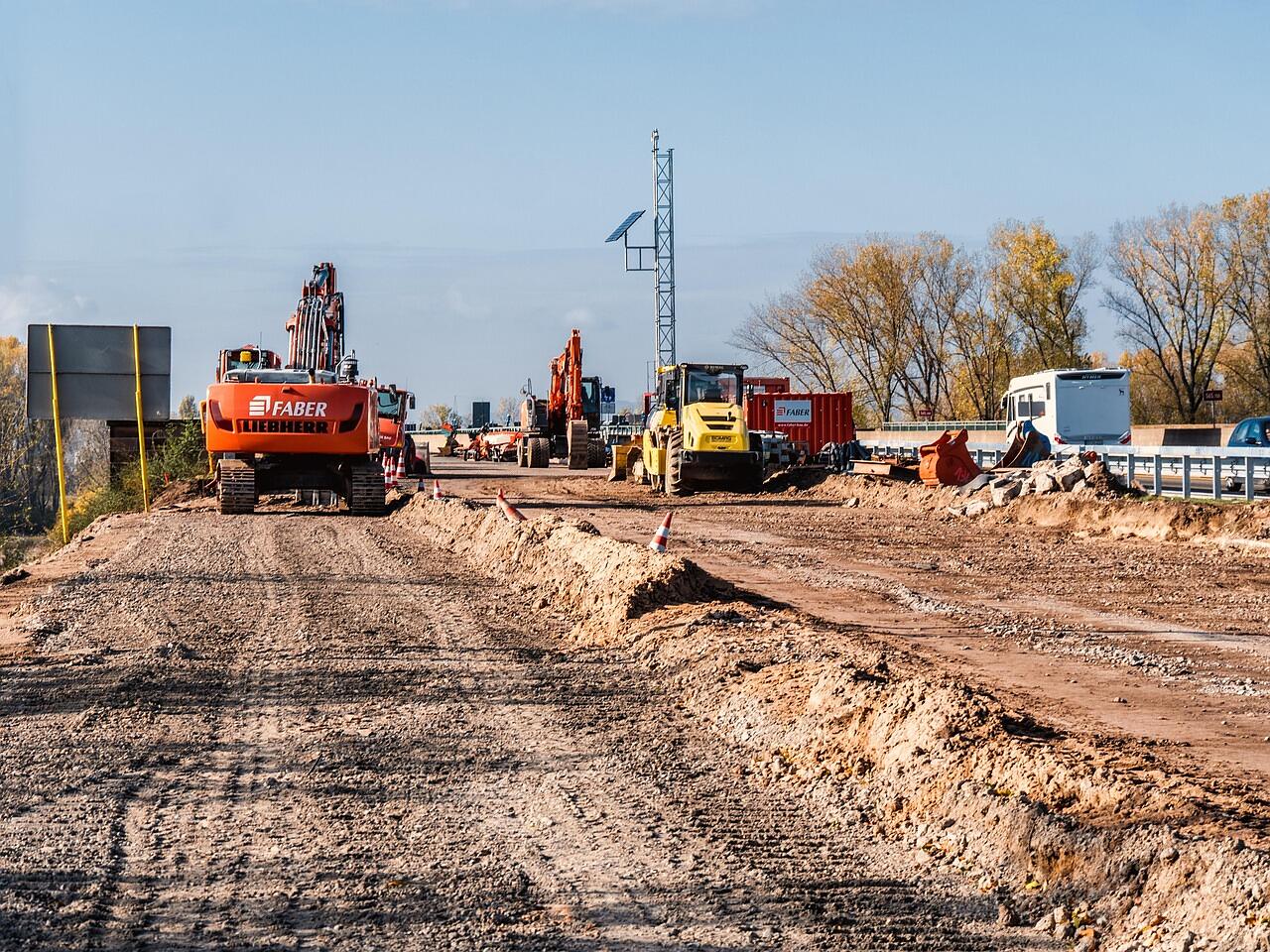
Along I-4, SR 417, St. Johns Parkway, Rinehart Road and Orange Boulevard the sites are conventional: fenced pads, one or two gates, a truck court, and a schedule that runs from earthwork through tilt-up to a mechanical package. That is the easiest shape we cover and the pricing reflects it, because a single gate and a defined perimeter let one officer hold a whole site.
The county is also pursuing an indoor sports complex on 28 county-owned acres near the airport, reported between $160 million and $175 million with architecture and construction management firms approved by August 2026 (reported by Spectrum News 13 and Connect CRE). Public projects of that size bring an owner who wants the overnight record in writing, and a long enough schedule that the coverage pattern should be reviewed two or three times before it finishes.
Acres of asphalt with nothing on them
The characteristic Sanford night shift is on a parcel with far more paved ground than building. An old retail site under redevelopment, an airport laydown yard and an industrial pad all share that quality, and it changes how an officer works. Long sight lines across open asphalt mean a vehicle is visible from a distance, and it also means the officer's own vehicle is visible from a distance, so the position gets changed through the night.
The other feature of these sites is the number of ways on. A parcel that was built to be driven onto has curb cuts everywhere, and the first useful thing a walk produces is a count of which ones are closed, which are fenced with panel that lifts, and which are still open. Closing three of them usually costs less than paying to watch them.

What a Sanford site gets from a staffed post
-
Somebody at the ways in, on a parcel with a dozen of them
Sanford sites tend to be old ground with a history of vehicle access: a retail ring road, an airport service route, an industrial parcel with two gates. A camera covers the entrance you thought about and misses the curb cut behind the building. An officer walking and repositioning through the night covers the ones nobody drew, makes contact when a vehicle appears where it should not be, and calls police as a witness to something in progress.
Under 25% of stolen construction equipment is ever recovered (National Equipment Register / NICB)
-
A plan written for demolition as well as construction
A teardown phase carries exposure a new build does not, because everything coming out of the building is scrap the moment it is loose and scrap converts to cash the same week. Coverage during demolition concentrates on where metal is staged and how a truck would reach it. Once vertical work starts the pattern changes to plant, copper and delivered material. We price the phases separately so you are not paying demolition coverage through a fit-out.
Average single construction equipment theft runs $30,000 (National Equipment Register / NICB)
-
Clear lines about who controls what
Industry guard turnover reached 77% in 2024 according to ASIS International, and the usual symptom is an officer who does not know whose gate is whose. On an airport job, a public project or a site sharing a parcel with a trading business, post orders here name what our officer controls, what belongs to the property operator, and who gets called for each. A supervisor is assigned to every post and attends it, and what happens on site is documented and comes to you.
Industry guard turnover hit 77% in 2024 (ASIS International)
A common call from a large Sanford redevelopment parcel
The situation: A common call from a demolition and site work contractor on a large retail redevelopment parcel in Sanford, with an enclosed building coming down in sections and scrap metal, conduit, copper and mechanical units staged on the asphalt awaiting trucks. The parcel is ringed by a service road with several curb cuts onto public streets, and people have been driving across that lot for decades. Losses have run weekly: staged metal gone overnight, catalytic converters cut off two parked machines, and a stripped copper coil taken from a unit set down that afternoon.
What gets done: A supervisor walks the ring road at night with the superintendent and counts eleven ways onto the parcel, of which four are open, three are closed with panel fencing that lifts at the bottom, and four are properly blocked. Before any hours are billed, the four open ones get closed with stored barrier and the three weak ones get hard tied. Scrap staging is consolidated from three locations into one that can be seen from a single position and lit with towers moved off the demolition face. An unarmed officer then covers the parcel from the crew leaving to first light, working two positions with a view across the asphalt, walking the staging and the parked plant on an irregular pattern, and repositioning the vehicle through the night.
How it turns out: The weekly losses stop, and most of the credit belongs to closing the four openings. The officer's remaining value is in the daytime edges of the shift, logging the scrap trucks in and out against the contractor's own tickets so what leaves the site matches what was supposed to. When demolition finishes and vertical work begins, the perimeter tightens to a construction fence with one gate and coverage steps down to a shorter overnight window.
Questions from contractors working in Sanford
What comes up on a first call about an airport job, an industrial pad, a redevelopment parcel or a downtown building.
Other areas we cover job sites
Nearby projects draw on the same officers, which is what keeps a patrol route economic rather than a long drive between two sites.